Watercolor Vintage Christmas Cat Clipart for Illustrations
I recently received a brief from a client launching a boutique line of handmade holiday gifts, and the request was specific: they needed visual assets that felt nostalgic, warm, and distinctly artisanal. They wanted to move away from the glossy, corporate look of big-box retailers and instead embrace a cozy, storybook aesthetic. That is when I started evaluating Watercolor Vintage Christmas Cat Clipart. As a designer who works daily with branding, packaging, and digital assets, I do not just look at an image; I analyze how it will function in a real-world commercial environment. This review breaks down whether this asset truly fits the bill for professional use.
The First Impression: Mood and Style
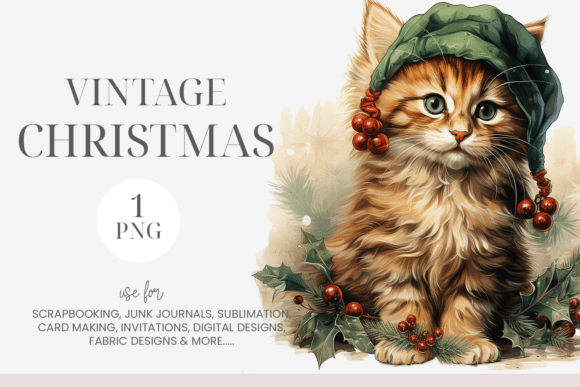
When you first open the folder containing this graphic design asset, the immediate feeling is one of soft nostalgia. The watercolor texture is not flat; it has the subtle bleed and grain of actual paint on paper. It avoids the overly saturated, neon vibes of modern digital art, opting instead for muted reds, deep greens, and creamy whites that evoke a traditional winter scene. For a small business owner or a crafter looking to build a brand identity, this mood is invaluable. It signals trust, warmth, and a connection to heritage. It feels like something you would find tucked inside a letter from a grandmother or displayed in a quaint village shop window.
This style naturally fits projects that rely on emotional appeal rather than stark minimalism. If your client is selling organic soaps, vintage-style stationery, or custom t-shirts, this illustration anchors their brand in a world of comfort. It transforms a simple product into a piece of art. However, the "vintage" aspect means it carries a specific weight; it is not suitable for a tech startup or a high-end financial firm. But for a handmade business, Etsy shop, or seasonal campaign, the visual hierarchy it creates is perfect for drawing the eye without shouting.
Real-World Application in Client Projects
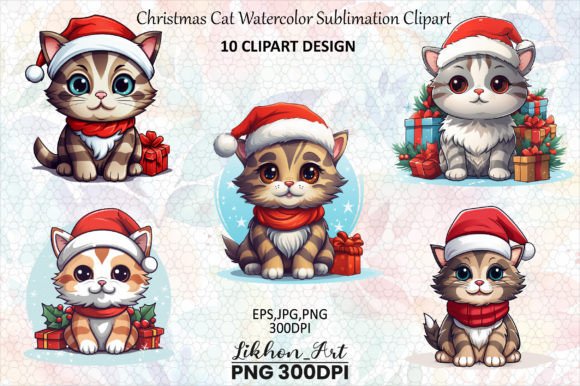
In my experience, the versatility of this asset depends heavily on where you place it within a layout. For a packaging design project, such as wrapping paper or gift tags, this clipart excels. The organic edges of the watercolor allow it to blend seamlessly with other elements, making it ideal for decorative accents around product labels. When used in product mockups, it adds a layer of depth that flat vector graphics often lack. Imagine a coffee mug with this cat illustration wrapped around it; the texture makes the print feel tangible and high-quality.
For digital marketing, specifically social media graphics like Pinterest pins or Instagram posts, this asset performs exceptionally well. In a feed dominated by sharp, clean photography, a soft, hand-painted illustration stands out. It stops the scroll because it looks different. It is also a fantastic component for creating a cohesive design bundle. You can pair this single image with matching floral elements or typography to create a full marketing visuals kit for a holiday launch. Whether you are designing a flyer for a local event or a banner for a website, the illustration provides a focal point that guides the viewer's attention.
Crafters and Cricut users will find this particularly useful for sticker design and t-shirt design. The vintage aesthetic aligns perfectly with current trends in apparel, where retro and nostalgic themes are highly popular. When cutting vinyl or preparing files for sublimation, the distinct color separation in the watercolor effect ensures the final print retains its artistic integrity. It elevates a standard merchandise item into a collectible piece of art.
Where to Use Carefully
Despite its charm, no asset is universal. There are scenarios where Watercolor Vintage Christmas Cat Clipart might hinder rather than help. If your client requires a very clean, minimalist branding system, this illustration could introduce too much visual noise. The organic, slightly messy edges of watercolor can clash with rigid geometric layouts or sans-serif fonts that demand precision. Similarly, if you are working on a complex background with busy patterns, the delicate details of the cat might get lost, reducing the overall impact of the design.
Readability is another critical factor. In editorial design or dense text layouts, placing this illustration directly over text can compromise legibility. The soft colors may not provide enough contrast against certain backgrounds, leading to accessibility issues. For professional corporate materials where clarity and authority are paramount, this whimsical asset might undermine the brand's seriousness. It should be used sparingly in these contexts, perhaps only as a small footer element or a subtle border, rather than a central hero graphic.
Practical Designer Notes for Commercial Use
Before integrating any digital product into a paid project, there are technical checks every designer must perform. First, always test the asset in black and white. Watercolor illustrations often rely on color harmony to maintain their structure; removing the hue can sometimes reveal a weak underlying composition. Check the contrast on both light and dark backgrounds to ensure the cat remains visible and does not disappear into the canvas.
File format is crucial. If you are purchasing this as part of a SVG design collection, inspect the vector paths to ensure they are editable and clean. For raster work, confirm that the PNG design includes a transparent background and is high-resolution (at least 300 DPI) for print quality. If you are using it in Canva templates or for Cricut projects, verify that the layers are grouped correctly. A common mistake is assuming all clipart is ready for immediate use; some files require cleanup before they can be scaled without pixelation.
Typography pairing is also essential. This illustration pairs beautifully with serif fonts that have a classic feel or handwritten scripts that mimic brush strokes. However, it might clash with ultra-modern display fonts or rigid block letters. Always preview the combination at various sizes. A design that looks balanced on a large poster might become cluttered when shrunk down for a social media avatar or a mobile ad.
Final Verdict on Visual Trust and Engagement
Ultimately, the success of Watercolor Vintage Christmas Cat Clipart comes down to the story it tells. In a market saturated with generic stock photos, this illustration offers a unique voice. It builds visual trust by signaling that the brand cares about detail and aesthetics. It enhances audience engagement by evoking positive emotions associated with the holidays and pets.
For designers, marketers, and small business owners, this asset is more than just a picture; it is a tool for building a recognizable brand identity. Just remember to respect its limitations. Use it where its warmth and texture shine, avoid it where strict minimalism is required, and always double-check the licensing to ensure you have the right to use it for commercial design. When applied with professional judgment, it can transform a standard holiday campaign into a memorable, polished experience.